

Growth Creates Communication Risks That Smaller Organisations Can Ignore
When a business is small, the founder can explain things personally. They know the clients and work closely with the team. If someone gets the wrong idea, a conversation can usually sort it out. As the business grows, more people speak on its behalf and the founder has less control over what they say.

Why Silence Is Not Neutral at Senior Level
Silence carries a different weight once you lead at scale. In a small team, a pause can be practical. People see you in the room, they understand context, and informal contact fills the gaps. At senior level, the same pause travels further than you intend. It reaches people who have no access to your thinking, and it lands in an environment where uncertainty looks for structure. The absence of communication becomes a signal, even when you meant it as a break from the noise.
This Work Is Not for Everyone
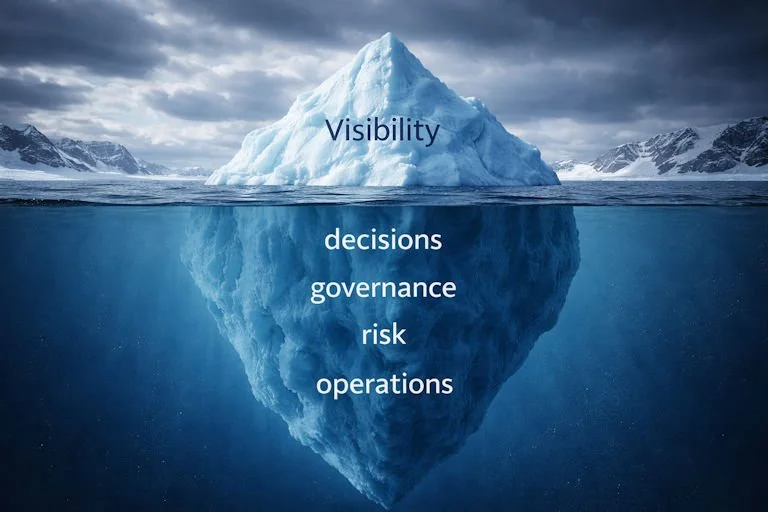
There is a particular kind of executive work that looks, from the outside, like “communications”. It involves words, messages, channels, audiences. It can even resemble visibility. In reality, the work we do at C-Suite Studio sits closer to decision-making than promotion. It deals with the moments when an organisation’s choices become visible to the market, to employees, to regulators and to history. That difference is why we are selective and why some leaders should choose a different kind of partner.

Visibility as Strategic Risk Management
A founder’s digital presence usually gets discussed in the language of brand. Tone, positioning, messaging, reach. Those are useful concepts, yet they keep the topic in the marketing lane, where it feels optional and largely aesthetic. Senior leaders then treat public visibility as something to “get to” when the company is bigger, or as an extension of fundraising and hiring. That framing misses what is actually happening.

Why Competence Stops Protecting You at Senior Level
At senior level, competence keeps working, yet its protective power thins out. People still notice whether you deliver, whether you understand the business, whether you can solve hard problems. What changes is that these traits stop being distinctive. In board facing roles, competence becomes a baseline expectation, and reputation becomes the variable.

The Quiet Risk of Narrative Drift
Power gradually diminishes rather than dramatically declining in the spotlight. It quietly erodes over time, until a leader realises their once weighty decisions now face doubt and qualification. This gradual weakening is usually explained as a shift in sentiment or a tougher media cycle. A quieter cause sits underneath it: narrative drift, the slow separation between what a leader is understood to stand for and what their actions, choices and presence now suggest.

Executive Positioning Is Not Personal Branding
Executive positioning loses its effectiveness when it is treated as a higher-status version of personal branding. The two practices share some surface features: both involve words, images and public interpretation. That resemblance has allowed tactical LinkedIn “makeovers” to borrow the authority of serious reputation work.